Diese Lektion wurde automatisch ins Deutsche übersetzt und noch nicht von einem Menschen geprüft. Falls etwas seltsam klingt, gilt die englische Fassung.
Sie haben den Begriff Künstliche Intelligenz – oder KI – diese Woche wahrscheinlich schon Dutzende Male gehört. Es ist in den Nachrichten, es ist in der Werbung und die Leute am Arbeitsplatz hören nicht auf, darüber zu reden.
Aber was ist das eigentlich? Lassen Sie uns das Rätsel aufklären.
Bevor wir etwas definieren, hier eine Überraschung: Sie sind bereits ein KI-Benutzer. Das bist du schon seit Jahren.
KI ist kein futuristischer Roboter. Es handelt sich um eine Software, die bereits in Ihren Alltag integriert ist.
Der durchschnittliche Mensch interagiert zwischen 20 und 30 Mal am Tag mit KI-gestützten Systemen – vom Entsperren seines Telefons am Morgen bis zum Erhalt einer Playlist-Empfehlung am Abend.
Hier ist die einfachste Definition:
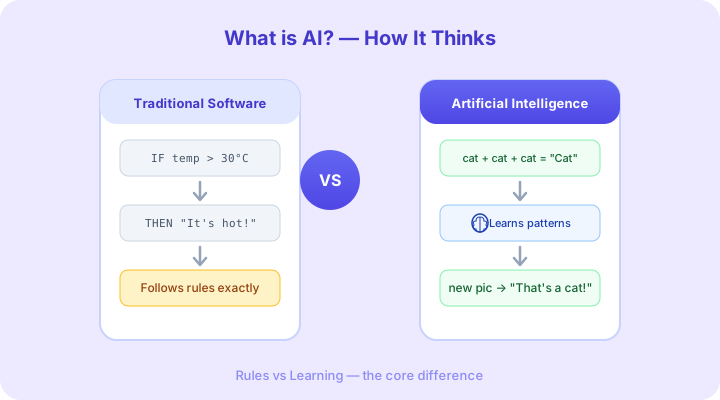
Künstliche Intelligenz ist Software, die aus Erfahrungen lernen und Entscheidungen treffen kann, anstatt nur festen Regeln zu folgen.
Lassen Sie uns das anhand eines Beispiels konkretisieren.
Ein herkömmlicher Taschenrechner folgt genauen Regeln: „Wenn der Benutzer 2 + 2 drückt, wird 4 angezeigt.“ Es wird niemals lernen, sich niemals verbessern, niemals etwas tun, was ihm nicht gesagt wurde. In Mathe ist er brillant, kann aber nichts anderes.
Ein Spamfilter in Ihrer E-Mail verfügt nicht über eine feste Liste von Spam-Wörtern. Stattdessen lernt es, indem es sich Millionen von E-Mails ansieht, die von Menschen als Spam oder Nicht-Spam markiert wurden. Mit der Zeit entdeckt es neue Muster, für die kein Programmierer jemals Regeln geschrieben hat. Mit der Erfahrung wird es intelligenter.
Diese Fähigkeit zu lernen und sich zu verbessern ist es, was KI von normaler Software unterscheidet.
Anmelden um an der Diskussion teilzunehmen
Denken Sie an Ihren E-Mail-Posteingang. Sie haben Spam wahrscheinlich schon seit Ewigkeiten nicht mehr manuell markiert, und doch werden in Ihrem Spam-Ordner jede Woche neue Tricks von Betrügern entdeckt. Das ist KI, die leise im Hintergrund lernt. Können Sie sich ein weiteres Beispiel vorstellen, bei dem Software scheinbar von selbst besser wird?
Nicht jede KI ist gleich. Wissenschaftler sprechen im Allgemeinen von zwei Arten:
Narrow AI ist darauf ausgelegt, eine bestimmte Aufgabe sehr gut zu erledigen. Die Gesichtserkennung Ihres Telefons ist eine eingeschränkte KI – sie kann Gesichter identifizieren, aber kein Gedicht schreiben oder ein Auto fahren.
Jede KI, mit der Sie heute interagieren, ist eine eingeschränkte KI:
Allgemeine KI wäre eine Maschine, die jede Aufgabe, die ein Mensch erledigen kann, denken, schlussfolgern und lernen kann – und möglicherweise sogar noch besser. Es würde zwischen dem Schreiben von Musik, der Diagnose von Krankheiten und einer philosophischen Debatte wechseln, so wie es ein Mensch tun kann.
Das gibt es noch nicht. Einige Forscher gehen davon aus, dass es Jahrzehnte dauern könnte. Andere denken, dass es vielleicht nie passieren wird. Die KI, die Sie in Filmen wie Ex Machina oder Her sehen, ist allgemeine KI – beeindruckend, aber vorerst fiktiv.
Was ist der Hauptunterschied zwischen enger KI und allgemeiner KI?
KI ist überall. Hier sind einige Beispiele, an die Sie vielleicht noch nicht gedacht haben:
| Bereich | Wie KI hilft | |------|-------------| | Gesundheitswesen | Frühe Anzeichen von Krebs bei medizinischen Untersuchungen erkennen | | Landwirtschaft | Drohnen erkennen, welche Pflanzen Wasser benötigen | | Bankwesen | Betrügerische Transaktionen in Millisekunden erkennen | | Einzelhandel | Vorhersage, welche Produkte nächste Woche ausverkauft sein werden | | Transport | Optimierung der Zustellrouten für Tausende von Paketen | | Unterhaltung | Erstellen personalisierter Playlists und Empfehlungen |
Der rote Faden? KI ist hervorragend darin, Muster in großen Datenmengen zu finden – viel schneller, als es ein Mensch könnte.
KI-Systeme können jetzt bestimmte Krebsarten anhand medizinischer Bilder mit einer Genauigkeit erkennen, die der von erfahrenen Ärzten entspricht und diese manchmal sogar übertrifft. In einer Studie identifizierte eine KI Brustkrebs in Mammographien um 11,5 % genauer als menschliche Radiologen.
Welche davon beschreibt am besten, was KI ist?
KI ist ein Werkzeug – wie ein Hammer oder ein Taschenrechner. Bei richtiger Anwendung ist es unglaublich mächtig, aber es „denkt“ nicht so wie Menschen. In diesem Programm werden wir untersuchen, was KI kann und was nicht, damit Sie sie selbstbewusst und verantwortungsbewusst einsetzen können.
Welches davon ist ein Beispiel für KI im Alltag?
Nachdem Sie nun wissen, was KI ist, geht es in der nächsten Lektion darum, wie Maschinen tatsächlich lernen. Wir werden den faszinierenden Prozess erforschen, der Rohdaten in intelligentes Verhalten umwandelt.